10 Stunning Rug Styling Ideas Interior Designers Recommend
Have you ever admired a beautifully designed living room and wondered why your own space doesn’t feel as polished? Even with quality furniture and stylish decor, a room can still feel incomplete. The missing piece is often the rug. Understanding the rug styling ideas interior designers use can instantly make a space feel more cohesive, balanced, and luxurious.
While many homeowners see rugs as simple floor coverings, interior designers treat them as the foundation of a room’s design. The right rug can define zones, connect furniture, and elevate the entire space. In this guide, you’ll discover expert rug styling ideas that create a designer-inspired look without requiring a large budget.
Key Layout Metrics at a Glance
- Dining Clearance: Minimum 24 inches beyond table edges for smooth chair movement.
- Bare Floor Border: 12 to 18 inches between rug edges and room walls.
- Underlayment Thickness: 1/4-inch felt-and-rubber combination pad for longevity.
1. The Golden Rule: Rug Placement & Furniture Anchoring
Before exploring patterns and colors, let’s address the single most frequent mistake in residential decorating: Floating Rug Syndrome. This occurs when an undersized accent rug sits isolated underneath a coffee table without touching any surrounding furniture legs. This layout mistake instantly shrinks the perceived footprint of your living space.
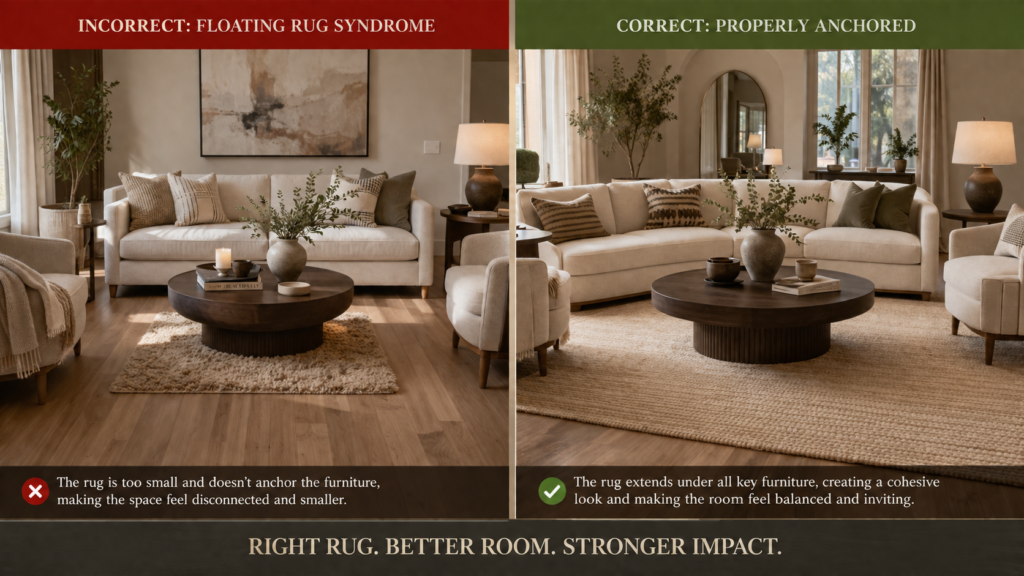
When considering spatial layout, professional rug styling ideas interior designers execute follow three strict rules:
- All-Legs-On Rule: Best suited for large, open-concept living rooms where every key furniture piece sits fully on top of the rug surface.
- Front-Legs-Only Rule: The most versatile approach for standard living spaces where the front two legs rest on the rug, while back legs rest on bare flooring.
- Floating Clearance Rule: Always maintain a uniform border of bare hardwood (ideally 12 to 18 inches) between the rug edge and surrounding walls.
2. The Double-Layer Method: Jute Base + Patterned Accent
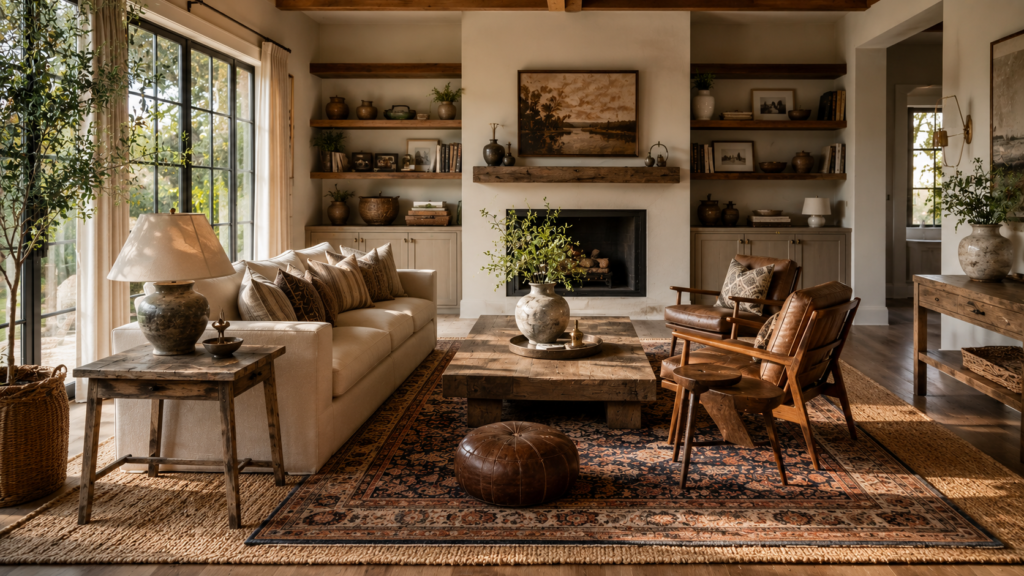
One of the most effective rug styling ideas interior designers utilize to create tactile warmth and depth is surface layering. Instead of spending thousands on a single oversized antique piece, stack two complementary textiles to achieve high-end texture without overspending.
This double-layering technique works through a structured two-step process:
- Base Foundation Layer: A large, affordable, neutral natural-fiber rug (such as Jute or Sisal) that spans almost the entire seating layout.
- Top Focal Accent Layer: A smaller, high-character patterned piece (such as a vintage Persian or Turkish Kilim) centered over the natural base.
Layering Combination Guide
| Layer Element | Recommended Material | Optimal Sizing | Primary Design Function |
| Base Foundation | Natural Jute, Sisal, or Chunky Wool | 9×12 ft or 10×14 ft | Grounds room, covers flooring expanse affordably |
| Top Accent | Vintage Persian, Kilim, Faux Cowhide | 5×8 ft or 6×9 ft | Adds color, personality, and plush visual interest |
| Low-Traffic Nook | Flatweave Cotton or Silk Blend | 4×6 ft or Round 6 ft | Defines small seating zones or reading corners |
3. Strategic Angle Manipulations in Open-Concept Layouts
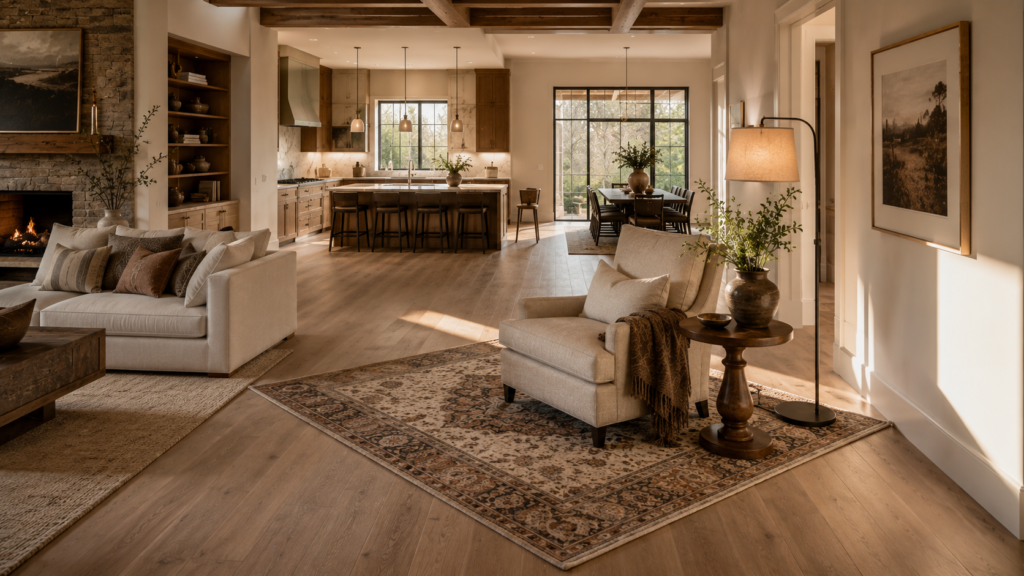
When decorating an open-concept layout or loft apartment, standard parallel alignments can feel rigid. Placing an accent rug at a 45-degree angle underneath a specific furniture group (such as an accent armchair with a floor lamp) creates an inviting nook. This clever trick breaks harsh architectural lines, directs foot traffic flow, and carves out functional zones within a vast open room.
4. Scale Matching: Large Motifs for Compact Rooms
A widely held decorating myth suggests small rooms require small, intricate patterns. In truth, small repeating patterns create visual clutter and shrink compact spaces.
Designer Insight: Implementing rug styling ideas interior designers recommend means choosing oversized geometric or abstract patterns for small spaces. Expansive lines trick the human eye into perceiving wider continuous surface area, making cozy spaces feel significantly larger.
5. Grounding Monochromatic Spaces with Texture
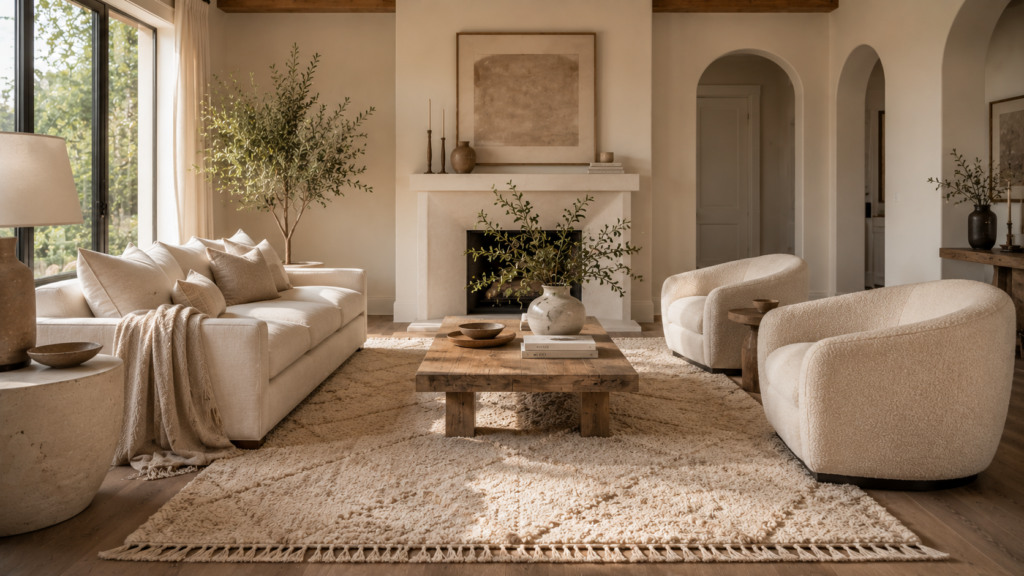
If your design aesthetic leans toward minimalist cream or monochromatic tones, a room can easily feel flat or cold without rich floor textures. Rather than introducing loud colors, experienced stylists apply high-contrast material combinations.
Try incorporating these material pairings to build subtle depth:
- Pair sleek leather sofas with deep, plush Moroccan high-pile wool.
- Pair tailored velvet seating with low-pile hand-woven flatweaves.
- Combine crisp linen upholstery with chunky braided jute underfoot.
Rugs do more than add visual interest—they also enhance comfort and sensory appeal. For more ways to create a warm and inviting space, explore our guide on Sensory Cozy Living Room Ideas.
6. Corridor Expansion: The Wide Runner Trick
Narrow hallways often feel dark and restrictive. Standard advice suggests placing a narrow runner down the center. However, clever rug styling ideas interior designers use involve selecting a runner that leaves no more than 3 to 4 inches of bare floor visible on either side. A wider runner with horizontal or cross-directional patterns visually expands the hallway, creating an open gallery feel.
7. Critical Sizing Rules for Dining Tables & Bedroom Sanctuaries
Improper floor textile sizing in dining rooms and bedrooms causes frustrating functional problems during daily use.
The Dining Room 24-Inch Border Rule
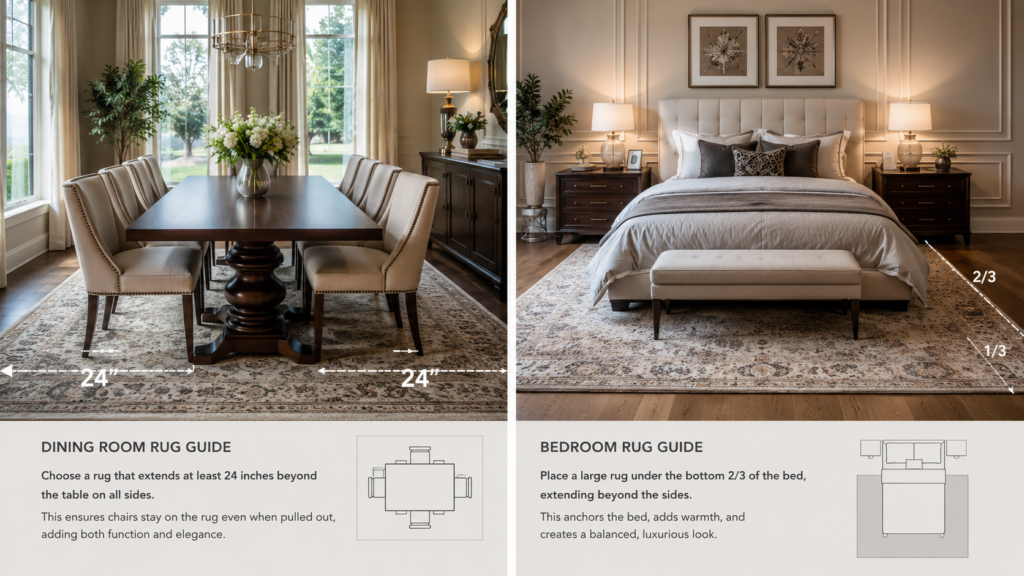
Your dining rug must extend at least 24 inches past all sides of the dining table. This allows guests to pull chairs out smoothly without chair legs catching on rug edges.
The Bedroom Perpendicular Placement Rule
Avoid pushing a large rug completely under the bed where most of it stays hidden beneath the mattress. Instead, run an 8×10 or 9×12 rug perpendicular to the bed, sliding it underneath the bottom two-thirds. This creates a soft step-out surface on both sides while showcasing the rug’s design.
Room-by-Room Sizing Specifications
| Room Type | Key Furniture Anchor | Recommended Rug Size | Pro Designer Tip |
| Living Room (Compact) | 3-Seater Sofa + Accent Chair | 6×9 ft or 8×10 ft | Anchor front sofa legs only; maintain 12″ border from walls. |
| Living Room (Large) | Sectional + Multiple Chairs | 9×12 ft or 10×14 ft | Use All-Legs-On rule to unify the primary seating area. |
| Primary Bedroom | Queen or King Bed Base | 8×10 ft (Queen) / 9×12 ft (King) | Position perpendicular under bottom 2/3 of bed layout. |
| Dining Room | 6 to 8 Seater Dining Table | 8×10 ft or 9×12 ft | Ensure 24 inches of extra space around all table edges. |
8. Color Pulling for Perfect Room Balance
How do top decorators make spaces feel thoughtfully unified? They use the rug as the primary color directive. Select a patterned floor textile containing three main accent shades, then distribute those colors strategically across the surrounding space:
- Base Tone (60%): Connects directly with wall color, main upholstery, or large window drapery.
- Secondary Tone (30%): Reflected in secondary seating, throw blankets, or table lamp bases.
- Accent Highlight (10%): Matched in small decorative pillows, artwork, or shelf ceramics.
Looking to add even more personality and energy to your space? Check out these dopamine decorating ideas for living rooms for colorful inspiration.
9. Embracing Organic & Sculptural Shapes
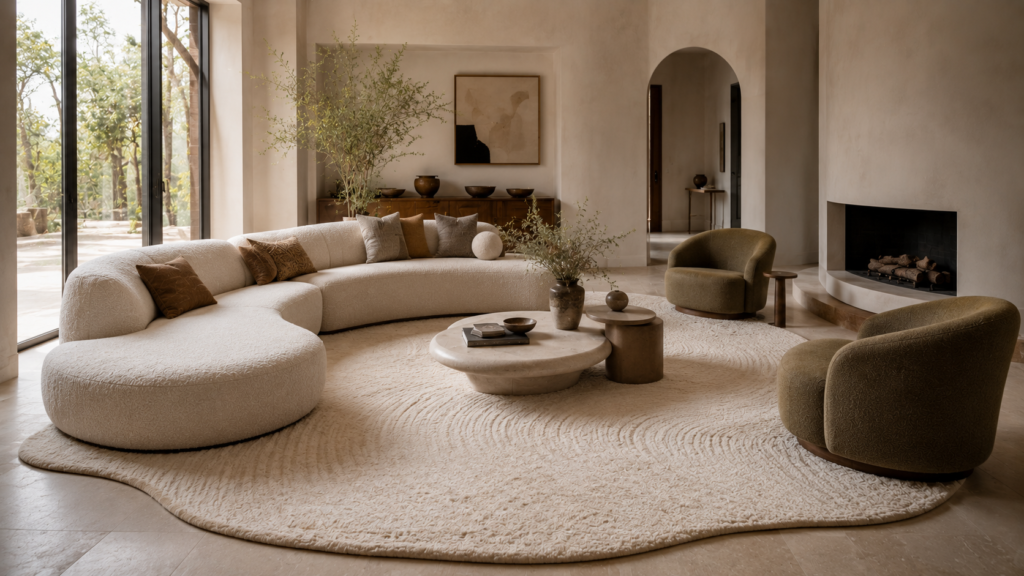
Rectangular floor coverings dominate the market, but round, oval, or asymmetrical shapes break up boxy architectural lines. In spaces with curved sectionals, circular bay windows, or compact foyers, an organic wool silhouette or round woven piece introduces artistic fluidity to formal spaces.
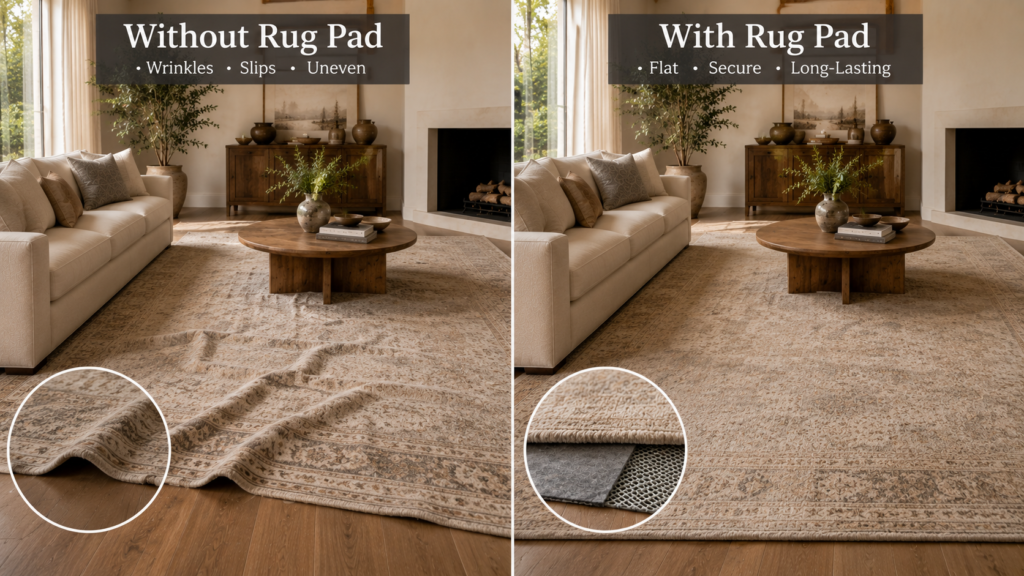
10. The Non-Negotiable Underlayment: Felt & Rubber Pads
You can purchase an expensive floor textile, but without a premium rug pad underneath, it will feel thin, shift easily, and wear out prematurely. Decorators always specify a 1/4-inch combination felt-and-rubber pad.
This essential foundation provides three primary benefits:
- Adds plush underfoot cushioning, making inexpensive flatweaves feel luxurious.
- Prevents dangerous slipping and shifting on polished hardwood or tile floors.
- Protects rug fibers from floor friction, significantly extending total lifespan.
Frequently Asked Questions (FAQs)
Q: What rug styling ideas interior designers suggest for small living rooms?
A: For small living rooms, choose a 6×9 ft or 8×10 ft rug rather than a tiny accent piece. Anchor the front legs of your sofa on the rug, select large-scale geometric patterns, and keep a 12-inch border of bare floor near walls to maximize visual space.
Q: Can you layer area rugs over wall-to-wall carpeting?
A: Yes! Layering over carpet introduces texture and defines functional seating zones. Select low-pile flatweaves or structured vintage pieces, and use a specialized non-slip pad for carpet-on-carpet stability.
Q: Which rug materials offer the best durability for high-traffic areas?
A: Wool, natural jute, and high-grade synthetic fibers (like polypropylene) excel in high-traffic zones. Wool is naturally stain-resistant and resilient, making it a favorite among interior design professionals.
Q: Should my rug be lighter or darker than my sofa color?
A: Creating contrast is key. If you have a dark sofa (navy, charcoal, dark leather), choose a light beige or cream rug. If your sofa is light linen or cream, opt for a deeper or richly patterned foundation to anchor the space.
Conclusion
Transforming your home from ordinary to luxury does not require complete architectural renovations or massive spending budgets. By mastering essential rug styling ideas interior designers use—such as proper furniture anchoring, strategic layering, correct dimensional sizing, and quality padding—you immediately elevate the structure, warmth, and balance of every room. Treat your floor coverings as the intentional anchor of your decor, and your home will effortlessly achieve that polished, editorial-worthy look.
[…] more inspiration, explore “10 Stunning Rug Styling Ideas Interior Designers Recommend“ to discover the rug placement techniques and styling secrets professionals use to make small […]
[…] to elevate your space even further? These rug styling ideas interior designers recommend can instantly make any living room feel larger, warmer, and more professionally […]
[…] your furniture, adds warmth underfoot, and follows the same design principles featured in these rug styling ideas interior designers recommend, instantly making any outdoor space feel like an extension of your […]
[…] even more expert-approved ways to layer and style rugs? Explore our 10 Stunning Rug Styling Ideas Interior Designers Recommend for timeless layouts and professional decorating […]
[…] A well-chosen rug anchors the entire room and adds instant warmth. For more styling inspiration, explore these 10 Stunning Rug Styling Ideas Interior Designers Recommend. […]
[…] For more ways to use rugs as a design feature, explore our guide to [10 Stunning Rug Styling Ideas]. […]
[…] well-chosen rug can instantly add softness and visual warmth, so check out these stunning rug styling ideas for designer-approved ways to layer rugs into your […]