
Best Bedroom Colors for Sleep: Science-Backed Hues
We spend nearly one-third of our lives sleeping, or at least trying to. Yet, millions of people toss and turn every single night, blaming their stress, their mattresses, or their screen time. While those factors definitely matter, there is a hidden sleep thief in your room that you might be completely overlooking: your walls.
The colors surrounding you before you close your eyes have a profound psychological and biological impact on your brain. In interior design, choosing a palette is not just about visual aesthetics; it is about choosing your mental state.
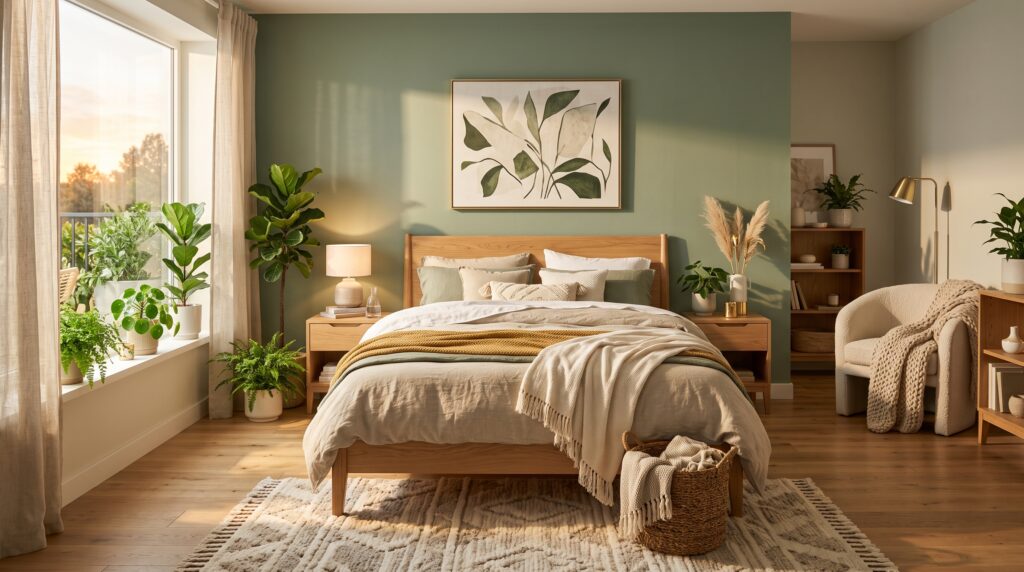
Different rooms serve different emotional purposes. While bedrooms require soothing tones, living rooms often thrive on uplifting palettes. Check out our dopamine decorating ideas for living room guide to learn how vibrant colors can enhance mood and energy levels.
If you are struggling to achieve deep, uninterrupted rest, understanding how to select the best bedroom colors for sleep can completely transform your nightly routine. Let us explore the fascinating science of color psychology and how the right shades can prime your body for perfect rest.
The Science: How Wall Color Affects Your Brain
To understand why color choice is so vital, we have to look at the anatomy of the human eye. Your retinas contain specialized receptors called ganglion cells. These cells are not responsible for your vision; instead, they collect information from light and send signals directly to the part of your brain that controls your internal 24-hour clock, known as the circadian rhythm.
When these cells pick up high-energy, vibrant colors, they signal your brain to release cortisol, the hormone that keeps you alert. Conversely, muted and calming shades trigger the production of melatonin, the hormone responsible for drowsiness. Therefore, picking the best bedroom colors for sleep is a biological necessity if you want your brain to shut down effortlessly at night.
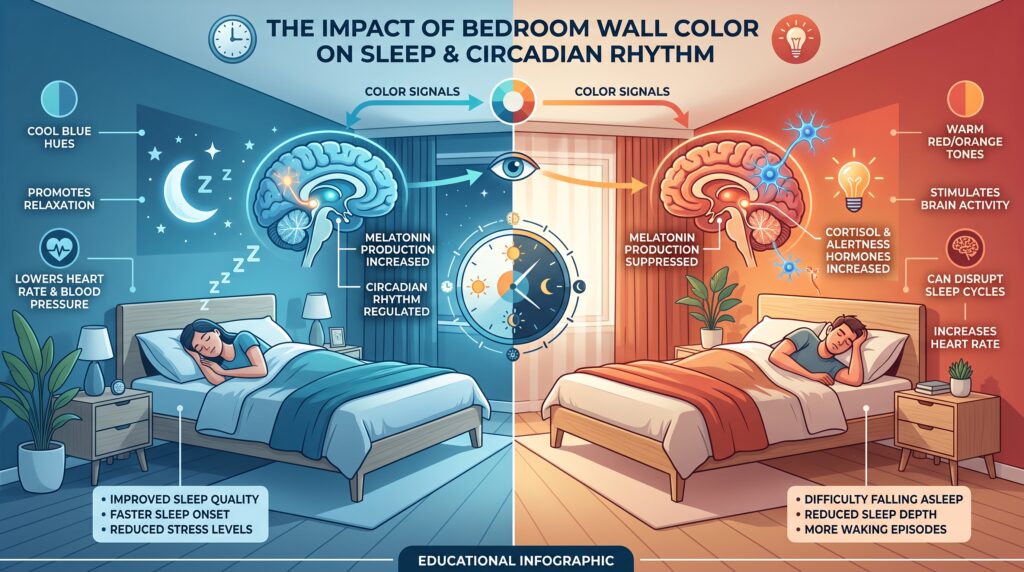
The Ultimate Sleep Transformation Matrix
Before diving into the detailed breakdown, this structural matrix shows how shifting away from high-stimulus shades to optimized palettes changes your sleep health:
| High-Stimulus Wall Shade | Optimized Sleep Alternative | Psychological Impact on Brain | Primary Sleep Benefit |
| Bright Crimson Red | Muted Sky Blue | Lowers heart rate and blood pressure | Lengthens deep sleep cycles |
| Vivid Lemon Yellow | Soft Sage Green | Reduces mental anxiety and stress | Promotes faster sleep onset |
| Dark Clinical Gray | Warm Taupe or Beige | Eliminates feelings of isolation | Creates a safe, cozy environment |
4 Best Bedroom Colors for Sleep to Transform Your Space
If you are ready to repaint or redecorate your sanctuary, these four science-backed color categories have proven to deliver the highest quality of rest.
1. The Undisputed Champion: Shaded Blue
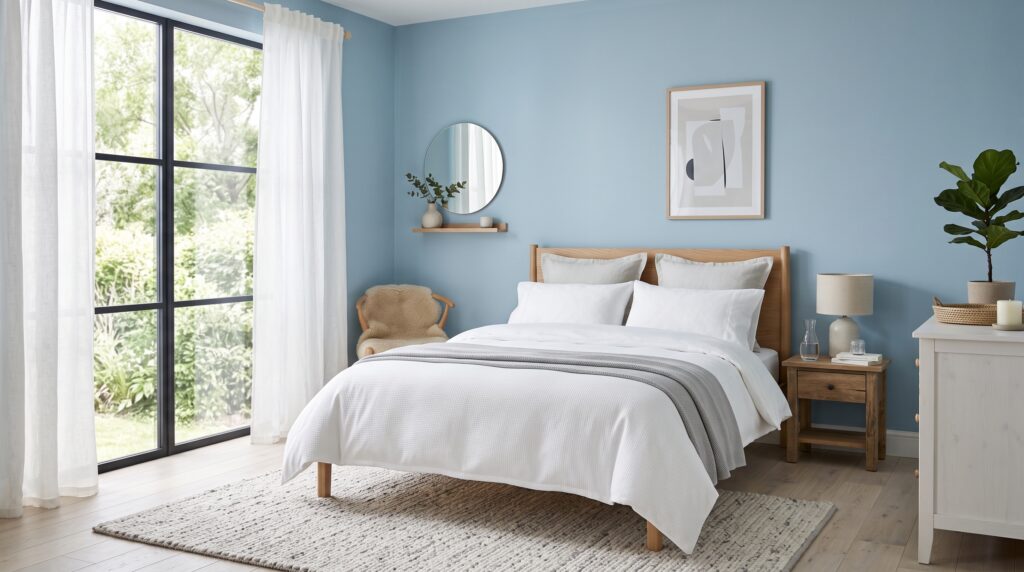
Study after study confirms that blue is the absolute best color choice for a bedroom. Because the ganglion cells in your eyes are most sensitive to blue wavelengths, a muted blue wall tells your brain that you are in a safe, tranquil environment.
When applying the best bedroom colors for sleep philosophy, avoid bright royal blues or electric shades. Instead, opt for soft sky blue, slate blue, or gentle pastel tones. People sleeping in blue rooms statistically enjoy the longest hours of sleep because this shade actively lowers heart rates and keeps blood pressure stable throughout the night.
2. The Stress Reducer: Soft Sage Green
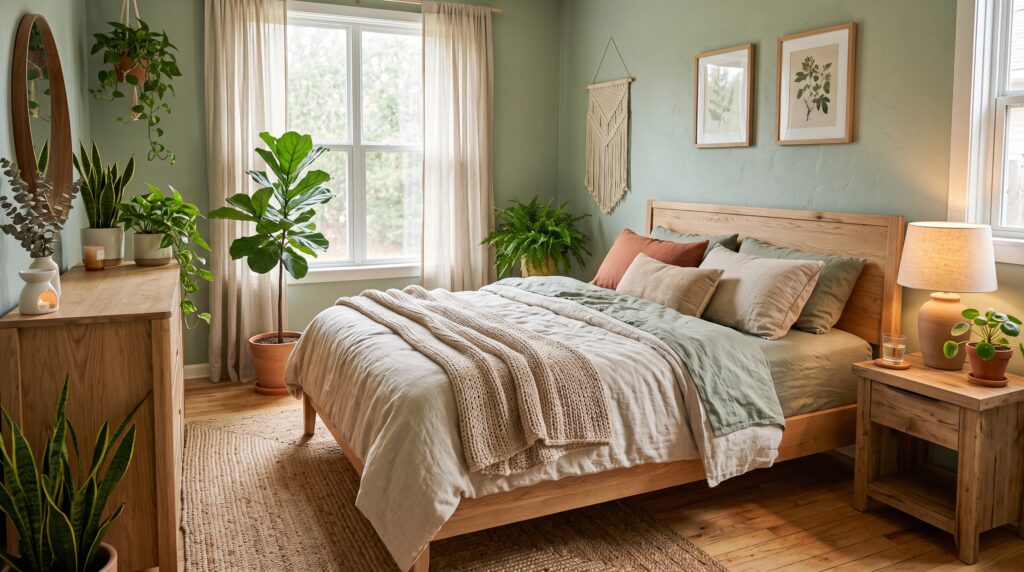
Green is the color of nature, rebirth, and tranquility. Psychologically, human beings associate green with abundance and safety, which is why it inherently lowers survival anxiety.
Using soft sage green or olive tones is an excellent alternative for those who find blue too cold. It grounds the bedroom, creating an organic oasis. When you use these best bedroom colors for sleep variations, you invite a sense of peace that allows your nervous system to transition from a state of “fight or flight” into a state of “rest and digest.”
3. The Warm Comfort: Soft Taupe and Warm Neutrals
Many modern homes rely heavily on stark, brilliant white or deep charcoal gray. However, clinical whites can make a bedroom feel cold, while dark grays can feel depressing over time.
Warm neutrals, such as taupe, soft beige, and creamy ivory, provide a gentle alternative. These shades give the eye a peaceful place to rest without sending any strong emotional signals to the brain. They act as a silent backdrop, wrapping the room in a cozy embrace that promotes a feeling of security.
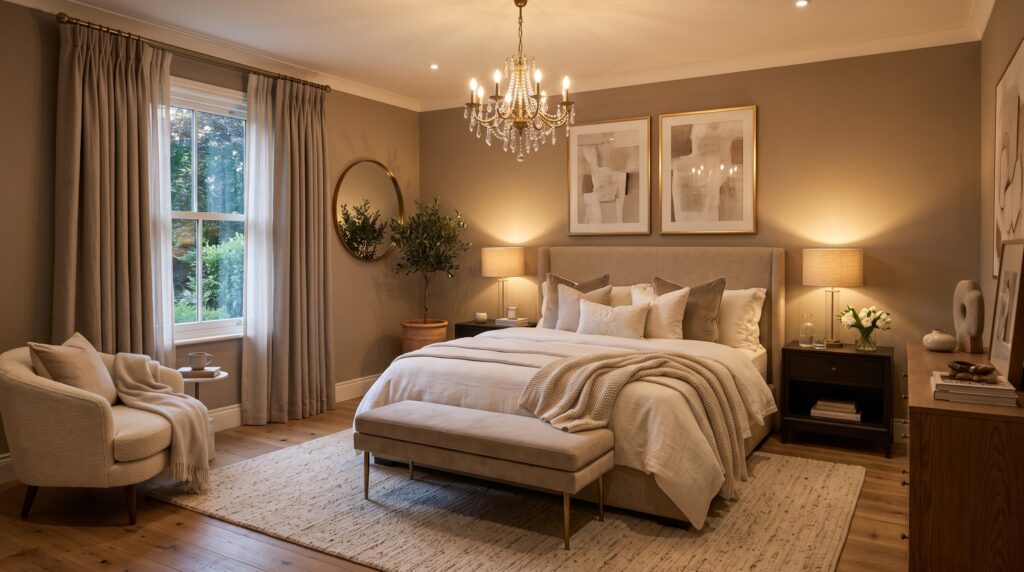
If you’re decorating on a budget, these calming shades pair perfectly with our guide on 6 Fake Cheap Bedroom Decor Tricks That Look Luxe, where you’ll learn simple styling techniques to make any bedroom feel more expensive.
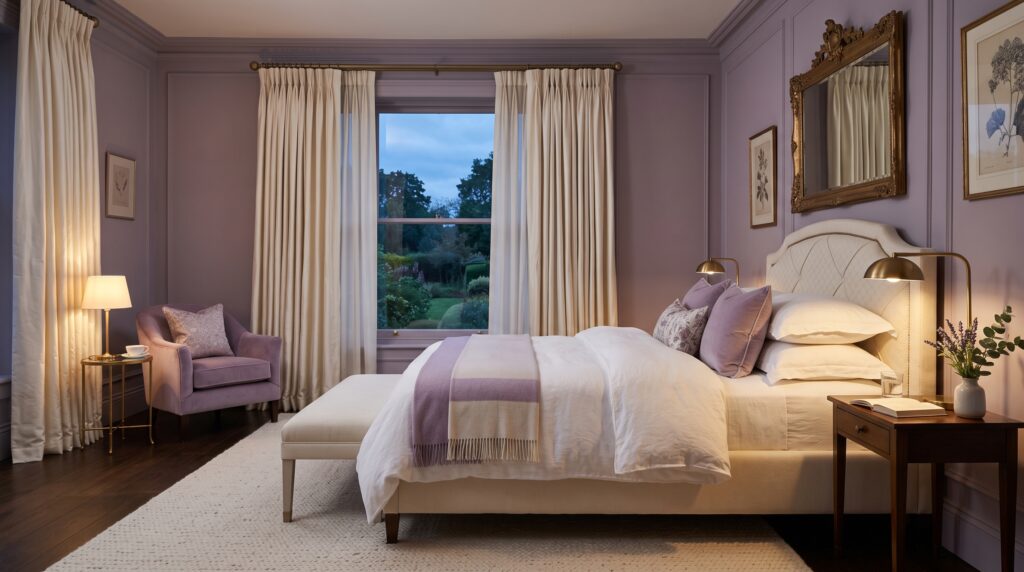
4. The Gentle Relaxer: Muted Lavender
While bright purple is associated with high creativity and can actually stimulate nightmares, breaking it down into a muted lavender or soft lilac produces the opposite effect. Lavender has cool undertones that mimic the quiet evening sky. It adds a sophisticated touch of color without overwhelming your senses, making it a highly underrated choice for deep relaxation.
Color Matching for Your Ultimate Sleep Palette
Creating a balanced palette involves pairing your wall tones with complementary bedding and accessories. This color matching guide helps you finalize your design strategy using the best bedroom colors for sleep:
| Primary Wall Choice | Complementary Secondary Tone | Recommended Fabric Material | Overall Room Vibe |
| Muted Sky Blue | Soft Crisp White | 100% Breathable Cotton | Fresh, Airy, and Peaceful |
| Soft Sage Green | Warm Oatmeal Beige | Textured Natural Linen | Earthy, Grounded, and Organic |
| Soft Taupe | Creamy Ivory / Soft Gold | Plush Velvet or Silk | Luxurious, Warm, and Safe |
Colors You Must Avoid in the Bedroom
Just as some shades induce sleep, others act like a cup of espresso for your brain. If you want a functional sleep space, ensure you stay away from these high-stimulation colors:
- Vibrant Red: Red increases your pulse rate and boosts adrenaline. It is a color of passion and emergency, making it disastrous for a bedroom.
- Bright Yellow: While cheerful during the day, bright yellow stimulates your analytical mind and can keep your brain overactive when you are trying to wind down.
- Glossy Finishes: Regardless of the color you choose, always use a matte or flat finish. Glossy paints reflect light easily, creating visual glare that keeps your eyes awake.
Frequently Asked Questions (FAQs)
What paint finish is best for a sleep-optimized bedroom?
You should always choose a flat, matte, or eggshell finish. These finishes absorb light rather than reflecting it, creating a soft, velvety texture on the walls that reduces eye strain in the evening.
Can dark colors be counted among the best bedroom colors for sleep?
Yes, but with caution. Deep colors like midnight blue or emerald green can create a cozy, cocoon-like effect. However, you must offset them with warm lighting and soft textiles so the room does not feel claustrophobic or gloomy.
How can I fix my bedroom color if I am renting and cannot paint?
If you cannot change the wall paint, you can still apply the best bedroom colors for sleep principles through large-scale textiles. Introduce muted blue or sage green through blackout curtains, large area rugs, and your main duvet covers to dominate the visual space.
Conclusion: Designing for Nighttime Peace
Your bedroom should be a sanctuary away from the chaotic noise of the modern world. It is the one place where your mind deserves to rest completely free of stimulation.
By upgrading your walls with the best bedroom colors for sleep, you are investing directly in your health, mood, and daily productivity. Start by removing high-contrast clutter and introducing soft, calming hues that quiet the mind. When your environment aligns perfectly with your biology, deep and restorative sleep follows naturally.
[…] shades is equally important. If you’re unsure which colors promote better rest, explore our guide to Best Bedroom Colors for Sleep: Science-Backed Hues for expert-backed […]